
January 8, 2026
Does Physical Therapy Actually Work for Chronic Back Pain?
People want to know if physical therapy can actually change the situation because chronic back pain sits in that uncomfortable area where biology and daily life collide. In a nutshell, movement-based rehabilitation can alter how the nervous system interprets pain signals and how tissues behave.
In order to restore spine stability, Prestige Medical and Physical Therapy uses motor control retraining, mobility work, and focused muscle development. Pain education calms the hypersensitive pathways that drive symptoms. These methods follow clinical guidelines from the American College of Physicians and the American Physical Therapy Association.
They support exercise-based care and patient education for chronic low back pain. Although none of this occurs instantly, the combination frequently encourages the system to operate more steadily and with healthier mechanics.
1) What Do Clinicians Mean by Chronic Low Back Pain?
Chronic low back pain is pain that lasts longer than 3 months. Often there is no single dramatic cause. Most cases are labeled nonspecific or mechanical, meaning the pain comes from muscles, ligaments, or joints. Plus, it can be from the way someone moves, rather than from a tumor, infection, or an urgent nerve emergency.
Knowing this matters a lot, because non-urgent problems are usually safer and more effective to treat with movement, education, and lifestyle change than with immediate surgery. Exercise-based therapies, when compared with no treatment or usual care, reduce pain and improve function for people with chronic low back pain.
The American College of Physicians and the American Physical Therapy Association recommend exercise and active care as first-line treatment, according to their current clinical guidelines. They also report that multidisciplinary programs combining movement, education, and psychological strategies often improve outcomes for people with long-standing disabilities.
These are the same principles we follow at Prestige Medical. and active care as first-line options, and multidisciplinary programs that combine movement, education, and psychological strategies often give better results for people with long-standing disabilities. We use these same principles at Prestige Medical.
2) How Does Physical Therapy Help?
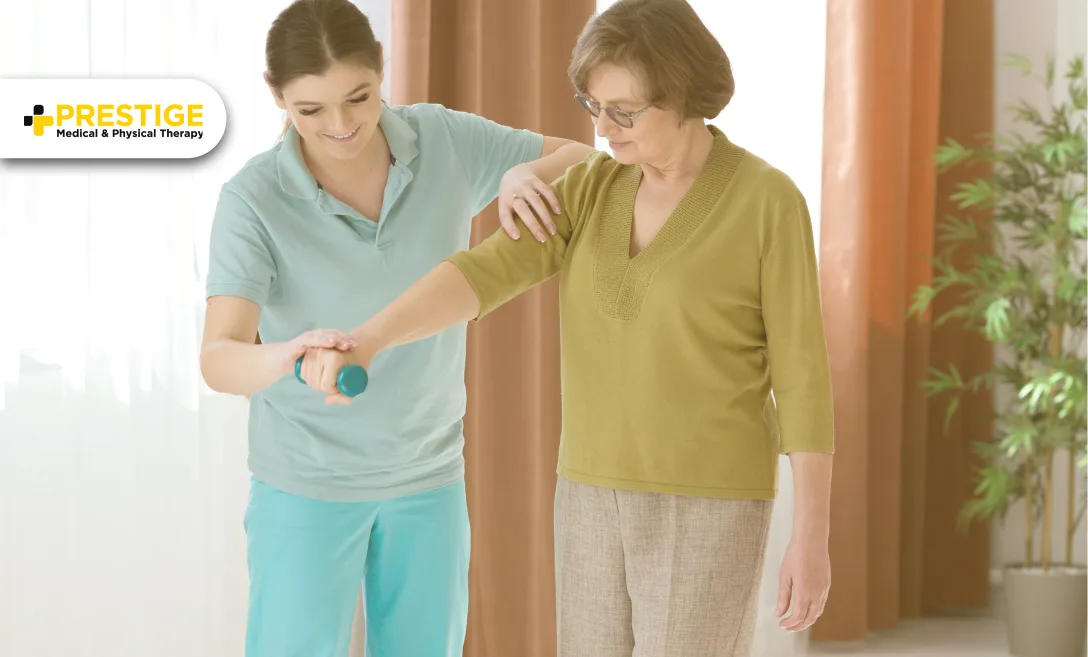
When someone begins to move in a structured way, circulation increases, which delivers oxygen and nutrients to tissues that have been starved of them. Muscles along the spine begin to work the way they were designed to work, steady and coordinated, rather than tense from long hours of guarding.
The nervous system starts to recalibrate, a process clinicians call motor control retraining. The brain learns to send cleaner signals and accept movement without sounding alarms. Pain education and graded exposure affect the psychological side of physiology.
When people understand what their pain is and is not, the nervous system becomes less reactive. Fear decreases, and the threshold for safe movement gradually rises. This is observable in clinics as improved functional scores and decreased sensitivity during repeated motion tests.
A well-designed exercise plan anchors all of this without surgery. When we align the difficulty of each movement with a person’s current capacity, the body adapts in a steady climb rather than a chaotic spiral. Strength improves, mobility expands, and day-to-day tasks become easier.
3) What Do the Typical Evidence Caveats Look Like?
Most people show improvement with physical therapy, but the change is usually moderate. In practical terms, this means the inflammatory pathways calm down and mechanical function improves, yet the nervous system may still signal discomfort for a while. Pain is a complex output of the brain, so it rarely switches off like a light.
When one treatment is applied alone, whether it is manual therapy, heat, stimulation, or a single exercise protocol, only a smaller portion of patients experience strong and long-term relief. The biology of pain spans muscles, joints, nerves, and psychological processing, so a single input is rarely enough to reset the system.
This is why we build plans with several layers. A coordinated program might combine strengthening, mobility work, cognitive pain education, and sometimes pharmacologic support. The goal is to give someone a clear timeline based on how the body typically adapts and to make sure the plan follows a rational sequence.
4) We Make Physical Therapy Work Better Than a Generic Approach

One generic approach for all programs rarely works. In fact, studies show that around 40% of adults with chronic pain also experience clinically significant depression or anxiety, which can interfere with healing. We give each patient a clear, prioritized plan. We start with a focused evaluation. Here’s how we do it in steps:
Root cause assessment, not checkbox therapy
We look for movement patterns, strength and endurance deficits, sleep issues, work demands, and the ways pain changes with activity. This helps us know whether the best path is strength training, motor control work, walking progression, or a cognitive behavioral approach, or a mix of those.
Progressive, goal-driven exercise
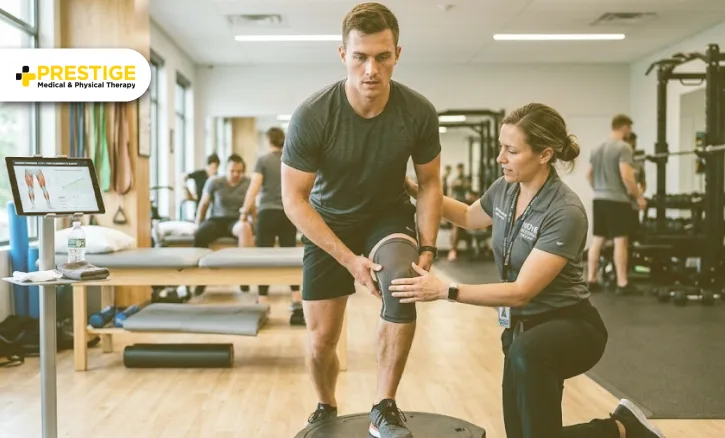
Therapy starts where the patient is, setting meaningful goals like walking the dog, returning to yard work, or sitting through a class, and we move the plan forward in small, measurable steps. We track progress, and we scale intensity or variety as tolerance improves. The evidence supports this kind of structured exercise compared with passive modalities alone.
Education that reduces fear and builds autonomy
Pain education is about explaining why pain persists, what movement does to the nervous system, and how graded exposure lowers sensitivity. When patients understand the “why” behind their program, they are more likely to stick with it.
Biopsychosocial and multidisciplinary coordination
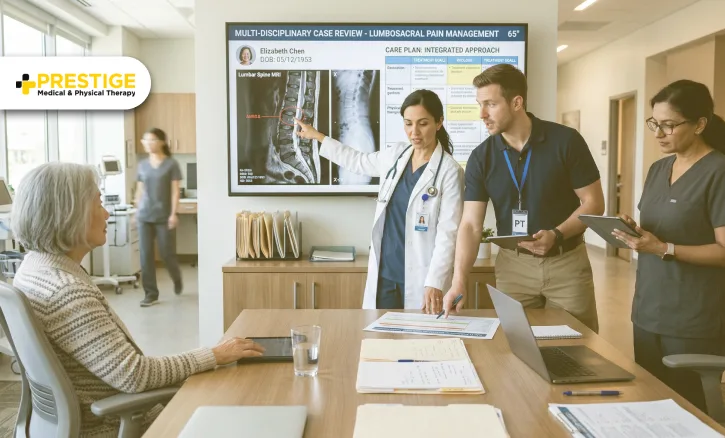
We coordinate care across disciplines, including the primary care provider, psychology, pain medicine, and occupational therapy when needed. This team approach is showing better outcomes for patients who live with severe, long-standing disability, and it keeps treatment grounded
Measured results
We use objective and subjective measures. That means range of motion and strength tests; however, it also includes activity goals, validated questionnaires, and Patient Reported Outcome Measures (PROMs). These tools reflect current data-driven practice across the U.S. healthcare system. Careful measuring lets us adjust the plan quickly if someone is not improving, and it helps patients recognize progress, even the small wins that matter.
5) How Long Our Medical Program Usually Takes
Week 1, evaluation and gentle guided movement. We take a detailed history, and we run brief physical tests. We explain results, and we give a few low-load exercises and walking targets. Education is a key part of this first visit.
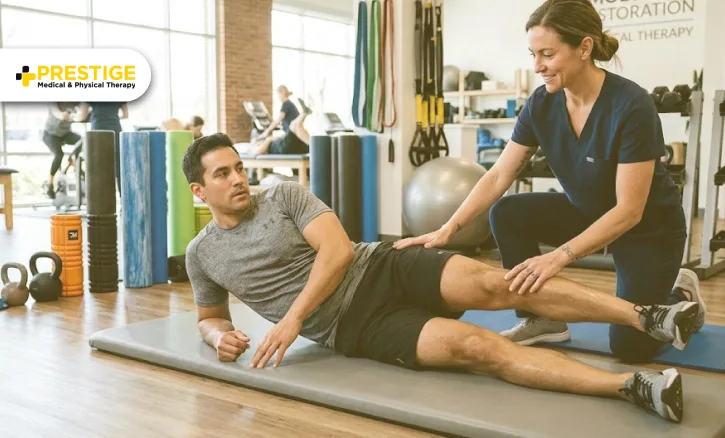
Weeks 2 to 8, active progression and coaching. We build a personalized program that includes strengthening, mobility, and motor control work, plus a walking or aerobic plan, and practical strategies for work and sleep. Appointments focus on coaching and technique, and a home plan is essential.
Weeks 8 to 12, consolidation and independence. Once a patient can do daily tasks with less pain and better confidence, we increase independence. We refine routines so they fit real life, and we set long-term activity goals.
6) When Physical Therapy Should Be the First Step

Physical therapy tends to be the right entry point for people whose back pain comes from mechanical stress, muscle weakness, or poor movement patterns rather than a single injured structure.
In these cases, the tissues are irritated but not structurally unstable. Active care restores normal joint mechanics, improves muscle endurance, and steadies the nervous system so it interprets movement as safe rather than threatening. Beginning with this type of care often prevents a chain of unnecessary tests or procedures, because many patients improve once the system starts moving the way it is meant to.
When there are no red flag symptoms, PT just puts it where the evidence suggests, which is at the front of the line. Small bursts of activity, such as quick walks that improve circulation and ease stiffness, are a good place to start. The following day, if the body objects, that is an indication to change the load and move forward more slowly. Repetition, not shock, is how the tissues adjust.
Some back pain has urgent features, such as saddle anesthesia, new bowel or bladder dysfunction, rapidly progressive weakness, or fever with severe spine pain. Those signs require an immediate medical evaluation. For most chronic back pain without those red flags, an organized physical therapy program is the safest place to start.
FAQs about Physical Therapy for Chronic Back Pain
1. Does physical therapy actually work for chronic back pain?
Yes. Research in 2025 from the American Physical Therapy Association reports that structured PT reduces chronic back pain for most patients through targeted exercises, mobility training, and graded strengthening.
2. How effective is exercise-based physical therapy for chronic low back pain?
According to a Cochrane review, exercise therapy reduces pain (mean difference −9.1 on a 0–100 scale, 95% CI −12.6 to −5.6) compared with no or minimal treatment.
3. Are there other PT methods that help chronic back pain?
Yes. Physical therapy modalities such as aquatic therapy have shown meaningful benefit. A meta-analysis found aquatic PT improved pain, disability, and quality of life compared to no therapy.
4. Why might early physical therapy be better?
PT (within a few weeks of symptoms) produces modest but significant reductions in pain and disability, especially in the short term (up to 6 weeks).
Start with Prestige Medical & Physical Therapy
Physical therapy is not a miracle cure; however, it remains one of the most reliable and low-risk evidence-based ways to help people with chronic low back pain. We use assessment, progressive exercise, education, and coordinated care to strengthen the chance of a lasting result.
If chronic back pain is limiting your life, conservative care is a sensible first step, and we are ready to help. If you are willing to try a structured, evidence-based program, call or book online for an initial assessment.
Disclaimer: The information presented is solely for informational purposes and does not constitute a doctor-patient relationship. Prestige Medical & Physical Therapy can provide individualized guidance or care.
Recent Blogs